

14 Years Running: Why Real Estate Is Still America's Favorite Investment
And What It Means If You're Thinking About Buying — or Selling — Right Now
Americans Keep Choosing Real Estate — and It's Not Even Close
Every year, Gallup asks Americans the same question: What is the best long-term investment you can make? And every year since 2013, the answer has been the same — real estate. Not stocks. Not gold. Not savings accounts. Real estate, by a wide margin.
In the 2026 Gallup poll, 38% of Americans named real estate as their top long-term investment pick. Stocks and mutual funds came in second at just 20%. Gold followed at 18%. It's not even a close race — and it hasn't been for over a decade.
That consistency is worth paying attention to. It tells us something important about how Americans actually think about wealth, security, and the future.
Why Real Estate Keeps Winning
The experts will tell you that stocks outperform real estate over long periods of time — and mathematically, they're not wrong. Over 30 years, the stock market has appreciated at roughly four times the pace of home values. So why does real estate keep winning the popularity contest?
The answer comes down to something deeper than spreadsheets: trust, tangibility, and the human desire for stability.
• You can live in it. A home isn't just an asset on paper — it provides shelter, community, and a sense of permanence that no stock certificate ever will.
• It builds equity quietly. Every mortgage payment chips away at what you owe while the value of what you own generally grows. That slow-and-steady wealth building feels safe in a way that market volatility never does.
• It survived the Great Recession. Home prices dropped sharply in 2008 and 2009 — but they came back, and they kept climbing. That resilience is burned into the memory of an entire generation of American homeowners.
• It's something people understand. Unlike options trading or index funds, most Americans have a personal relationship with real estate. They've rented, they've bought, they've watched their parents build equity. It feels knowable.
What the 2026 Data Actually Shows
This year's survey isn't just a repeat of last year's results — confidence in real estate is growing. Homeownership sentiment has been rising even as mortgage rates have stayed elevated and affordability has remained a challenge for many buyers. That's a meaningful signal.
People aren't choosing real estate because it's easy or cheap right now. They're choosing it because they believe in it as a long-term store of value — and that belief has been earned over decades of historical performance.
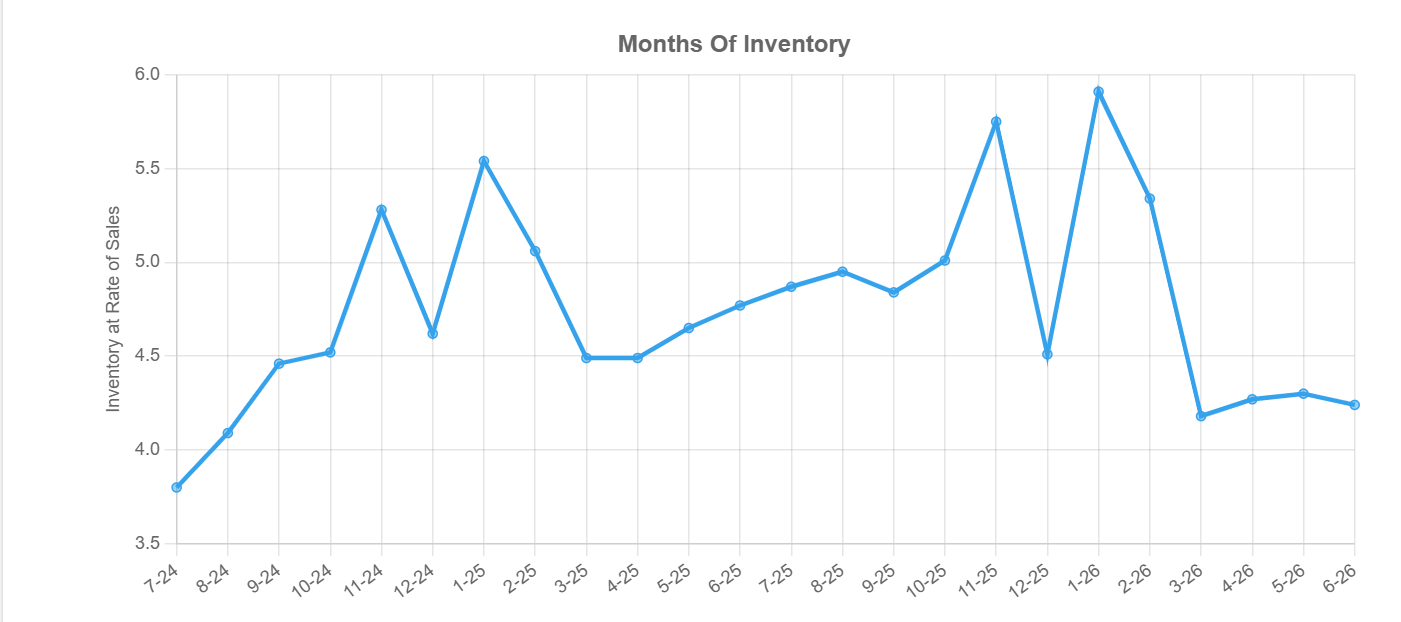
Home prices nationally are up approximately 1.7% year-over-year as of mid-2026, with forecasts calling for a 2.3% gain by year-end. That's modest appreciation — but it's positive, it's real, and it's sitting on top of years of prior gains for anyone who purchased even three or four years ago.
What This Means for Buyers
If you've been on the fence about buying, this data should give you some perspective. The people who bought homes five, ten, or fifteen years ago — even the ones who bought right before the Great Recession — are, in most cases, sitting on significant equity today. Waiting rarely turns out to be the winning strategy.
Yes, rates are higher than they were in 2020 and 2021. Yes, prices are still elevated in most markets. But the alternative — renting indefinitely while home values continue to appreciate — means watching that opportunity pass. You can refinance a rate. You can't recover years of equity you didn't build.
What This Means for Sellers
If you own a home, you're sitting on one of the most trusted asset classes in America — and in most cases, a significant amount of equity. The market has shifted toward balance, but demand for homes hasn't evaporated. Buyers are still out there, still motivated, and still confident in what they're purchasing.
A well-priced, well-presented home in today's market will find a buyer. The era of automatic bidding wars may have cooled, but the fundamental appeal of homeownership — the reason Americans have chosen real estate over every other investment for 14 straight years — hasn't gone anywhere.
What This Means in Phoenix, Arizona
Phoenix is one of the clearest examples of real estate's long-term staying power. The Valley experienced dramatic appreciation during the pandemic years, a natural correction in 2022 and 2023, and has since stabilized into a more sustainable pattern. Homeowners who purchased in the Phoenix metro five or more years ago are sitting on meaningful equity gains — even accounting for the correction.
Population growth and economic diversification continue to drive long-term demand. For buyers who believe in the 14-year trend the Gallup data reflects, Phoenix remains one of the more compelling Sun Belt markets to establish a foothold.