
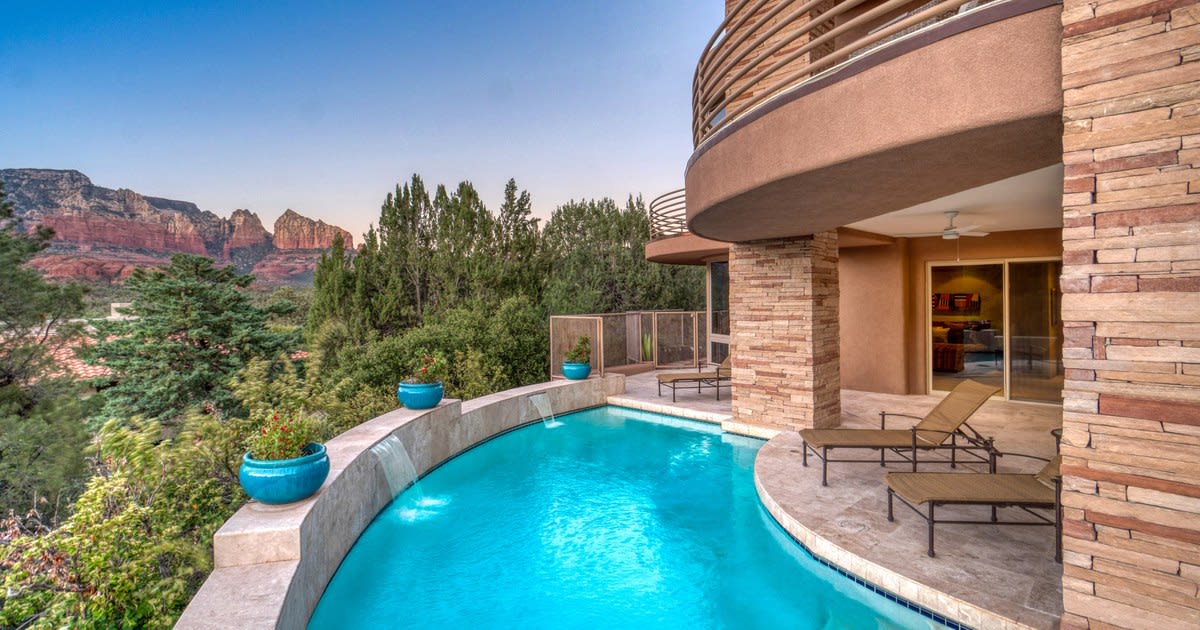

For a lot of people house hunting in the Valley, a backyard pool sits near the top of the wish list, and November happens to be a comfortable month to evaluate one because you can walk the yard, look closely at the equipment, and picture next summer without baking on the pool deck.
Buying a home with a pool in Phoenix comes with a few extra rules and questions. Here is what to know before you write an offer.
Arizona’s Pool Barrier Law in Plain English
Arizona’s baseline rule is A.R.S. § 36-1681. It applies to pools that hold water 18 inches or deeper at any point and are wider than eight feet. In general, the pool must be entirely enclosed by a wall, fence, or barrier at least five feet high, with no openings a four-inch ball could pass through and no handholds or footholds that make it easy to climb from the outside. The barrier must sit at least 20 inches from the water’s edge. The statute has some exceptions, including homes where all residents are at least six years old, but local codes can be stricter.
Gates in that enclosure must open outward, away from the pool, and be self-closing and self-latching, with the latch generally at least 54 inches above the ground.
If the house itself forms part of the enclosure, state law requires an additional layer of protection between the home and the water. The options include a separate barrier at least four feet high, a motorized safety cover operated by a key switch, or self-latching doors and window protections on openings that lead directly to the pool.
Phoenix and Other Valley Cities Can Add Their Own Rules
The state law lets cities enforce their own pool barrier ordinances as long as they are equal to or more stringent than the statute, so the exact requirements depend on where the home is located, whether that is Phoenix, Scottsdale, Mesa, Chandler, Gilbert, or elsewhere in the Valley.
The City of Phoenix publishes a pool barrier requirements guide that is worth reading if you are buying inside city limits. A few points stand out for buyers:
· Phoenix requires a physical barrier between the house and the pool in addition to the fence separating the pool from neighboring properties, with options that include an inner fence, using the house wall with compliant doors and windows, or an approved motorized safety cover
· Once an approved barrier is installed, the city says it must remain in place for the life of the pool
· A new permit is required to enlarge, alter, repair, remove, or replace an existing approved barrier
· Pet doors are not allowed on doors that form part of a house-wall barrier
That permit point matters if you are already picturing taking down a pool fence to open up the yard. Check with the city before you plan any changes.
The Pool Safety Notice You Should Receive
Arizona law also requires that anyone who sells, rents, or leases a home with a pool give the buyer or renter a pool safety notice approved by the Arizona Department of Health Services. The ADHS Residential Pool Safety Notice summarizes the enclosure requirements and adds practical recommendations, such as never leaving a child unattended around the pool, keeping gates closed rather than propped open, checking gate locks and latches regularly, and having household members take water rescue and CPR classes.
Read it rather than just initialing it, especially if young children live in or visit the home.
Buying a Home With a Pool in Phoenix: What to Check Before You Close
A general home inspection may only touch lightly on the pool. Ask your inspector what is included, and consider a specialized pool inspection for a closer look. A useful checklist:
· Walk the full barrier, including gates, and confirm each gate closes and latches on its own
· Test doors and windows that open to the pool area if the house wall is part of the barrier
· Ask the seller about the pool’s age, past resurfacing, and any equipment replacements
· Look over the pump, filter, heater, and any automation, and ask for service records
· Ask whether the city has permit records for the pool and barrier
· Talk with your insurance agent about coverage and any requirements for a home with a pool
What This Means for Phoenix Buyers and Sellers
For buyers, a pool can be a wonderful part of Valley living. Understanding barrier rules and the safety notice up front, and building a proper pool inspection into your timeline, helps you avoid surprises and budget for any fixes before closing.
For sellers, a working gate latch, a barrier in good repair, and organized service records make it easier for buyers to say yes. Have the ADHS pool safety notice ready to go with your disclosures so nothing holds up the process.
A local real estate professional who knows Phoenix-area neighborhoods can help you compare pool homes, coordinate inspections, and keep your purchase on track. Reach out to start your search, and enjoy that first swim next spring.