


There is a rhythm to real estate, and in Phoenix that rhythm has its own desert beat. Spring gets all the attention. The new year brings fresh listings, motivated buyers, and competitive offers. But fall? Fall is when the Phoenix real estate market quietly becomes one of the most interesting environments of the entire year — and 2026 is proving that out in a compelling way.
Here is what is happening right now across the Valley, and what it means if you are thinking about buying or selling this season.
Where the Market Stands Heading Into Fall
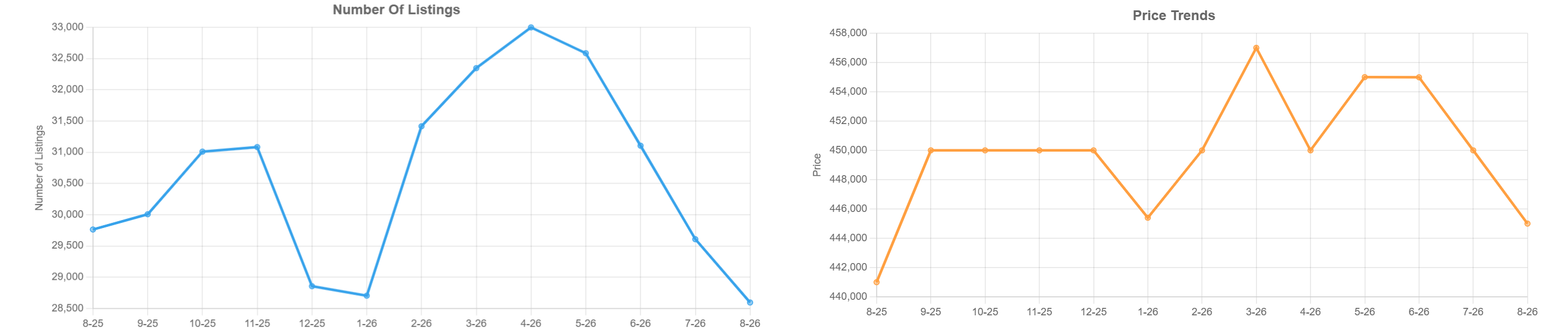
The Phoenix metro has been on a gradual recalibration through 2026. After years of rapid appreciation, the market has settled into something more measured and more sustainable. The median home price is currently sitting around $444,000 to $465,000 depending on the submarket and data source, representing essentially flat year-over-year movement. Active listings across Greater Phoenix are hovering around 24,000 to 26,000 homes, giving buyers a meaningful selection that simply did not exist two or three years ago.
Days on market have extended to around 94 days on average metro-wide — a dramatic contrast to the frenzy of 2021 and 2022, when homes were routinely going under contract in days. Mortgage rates have stabilized in the low-to-mid 6 percent range, giving buyers greater predictability in their monthly payment planning than they had during the volatile rate swings of the past two years.
The overall picture is a market that is balancing. Not crashing. Not booming. Balancing — and that is actually a healthy and productive environment for both buyers and sellers who approach it with the right strategy.
Why Fall Is a Smart Time to Buy in Phoenix
Phoenix's fall market has a quiet advantage that most buyers overlook. Summer in the Valley is brutal — 115-degree days keep casual browsers at home and slow foot traffic at open houses significantly. The buyers who persisted through summer are serious and motivated. As temperatures break in September and October, inventory that sat through the summer often comes with sellers who are increasingly ready to negotiate.
That dynamic, combined with the existing leverage buyers already have in today's Phoenix market, creates a compelling entry point. Sellers who listed in spring and summer and have not yet sold are now 90-plus days into a listing. Many have already reduced their price once. Many more are open to closing cost contributions, inspection credits, and rate buydowns that they would not have considered when they first hit the market.
TSMC's continued $100 billion plus expansion in North Phoenix, Intel's Fab 52 operations, and the broader semiconductor and advanced manufacturing ecosystem anchoring high-wage employment in the Valley mean the fundamental demand driver for Phoenix housing has not weakened. People continue to relocate here for jobs — and those people need homes.
Why Fall Is Also a Reasonable Time to Sell
Sellers who are hesitating because of the broader market slowdown should understand something important about fall in Phoenix: the buyer pool this time of year is more serious, not less. The tire-kickers and curious browsers have largely gone home. The people actively touring homes and writing offers in September and October are people who need to move — job relocations, lease endings, growing families, life transitions. They are motivated and they are qualified.
The key for Phoenix sellers this fall is the same as it has been all year: price accurately and present well. The data is clear that correctly priced homes are still selling at solid prices and in reasonable timeframes. Overpriced homes are sitting and eventually chasing the market down with reductions that cost more than pricing right from the start would have. A local agent with current comparable sales data in your specific neighborhood is the most valuable resource you have going into this season.
The Submarket Picture
As always with Phoenix, the metro average tells only part of the story. Ahwatukee continues to show tighter inventory than much of the Valley — buyers targeting the Foothills communities need to move with more urgency. Scottsdale's luxury tier remains active with serious buyers, particularly in the corridor from Old Town north through the 101. The West Valley — Surprise, Goodyear, Buckeye — is where the largest concentration of new construction inventory and builder incentives are concentrated, making it a strong option for buyers who want rate buydowns and upgrade packages baked into their purchase.
Chandler and Gilbert have seen more price moderation than some parts of the Valley, which has created genuine entry opportunities in neighborhoods that were largely inaccessible to first-time and move-up buyers at the peak.
The Bottom Line for Fall 2026
Phoenix enters fall 2026 with strong economic fundamentals, stable pricing, improving inventory, and a rate environment that — while not the lows of 2021 — is predictable enough for buyers and sellers to plan around. That is a better backdrop than it sounds.
The buyers who have been waiting for the right moment are finding it now. The sellers who price and present their homes correctly are moving them. The window that exists this fall is real — and working with a knowledgeable local agent is how you make the most of it.